AndyO Blog

Sunday, April 08, 2012

The Exorcist: The first blockbuster horror film

The Exorcist raised the bar on horror films, creating a truly terrifying story that's still scary today. The Exorcist brought a realistic approach to horror that hadn't been seen before, and was the first horror blockbuster, grossing (US) $232,906,145 in the U.S. If you adjust the gross in today's dollars (2012), it would be (US) $865,991,500 (the 9th highest U.S. domestic gross).

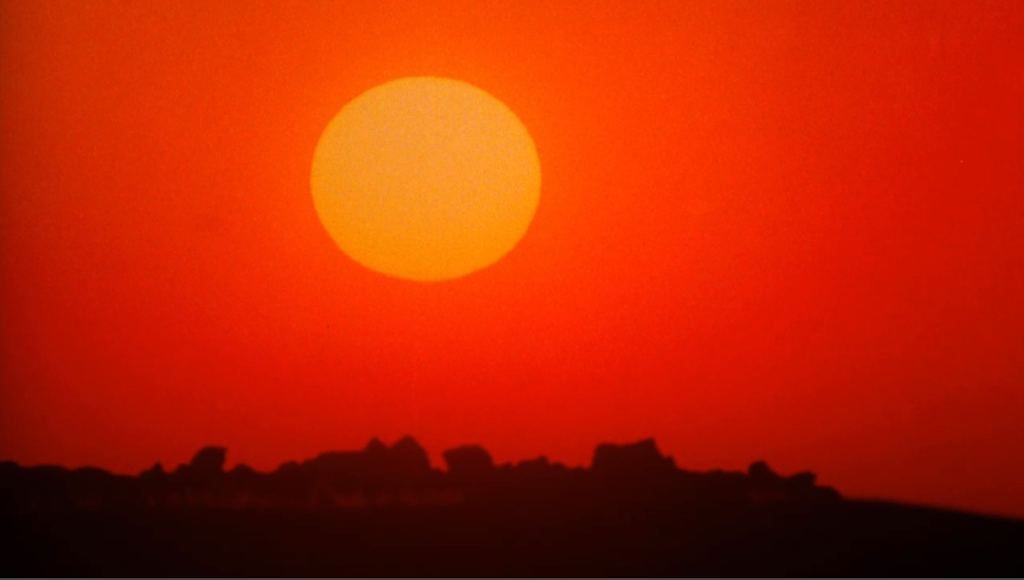
Opening image from "The Exorcist"

While The Exorcist didn't win the Oscar for Best Picture in 1973, it did win for Adapted Screenplay and Best Sound. It was nominated for a total 10 awards.

The other films nominated for the Best Picture Oscar in 1973 included:

  • The Sting (Winner)
  • American Graffiti
  • Cries and Whispers
  • The Exorcist
  • A Touch of Class

For the Golden Globes, The Exorcist was nominated for seven awards and won four awards, including Best Picture.

The cinematic and cultural influence of The Exorcist

The Exorcist's influence has only grown since its release, as polls frequently rank it among the scariest films of all time. While it hasn't been added to the AFI's top 100 films, it has made the "AFI's 100 Years ... 100 Thrills" list, coming in at #3. To see the effect of The Exorcist on other films and TV, see this IMDB Movie Connections page for The Exorcist.

Perhaps it's understandable why the Academy was wary of voting for The Exorcist. First and foremost, horror films didn't win Best Picture. And then there was all the hysteria and hype around the film. 

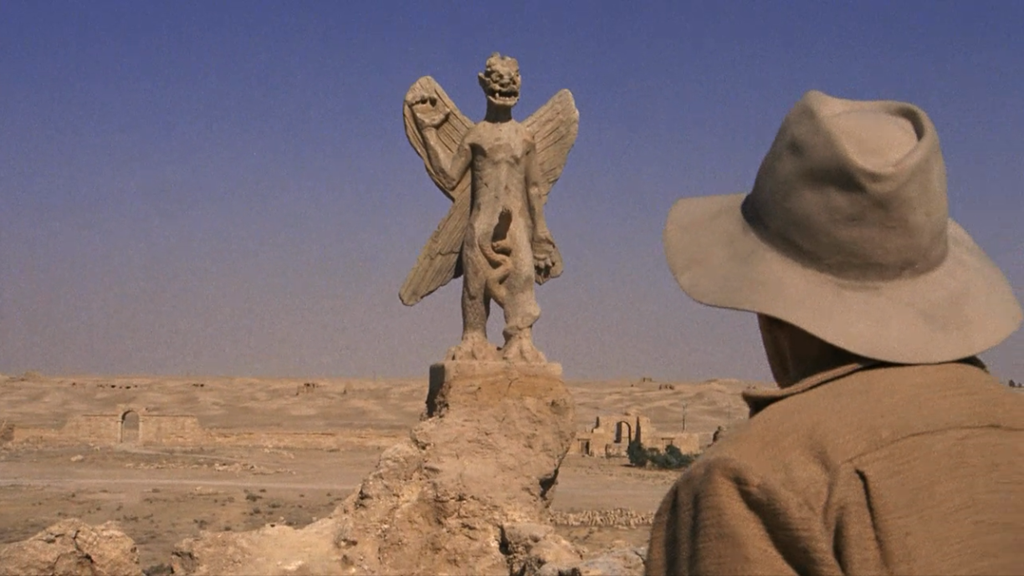
Father Lankester Merrin encounters the demon Pazuzu statue in Iraq

In L. Vincent Poupard's excellent article, "The Cultural Impact of the Exorcist," he writes of what happened when the film was released:

When The Exorcist came out, a strange occurrence happened across the country. For the first time in years, churches all over became packed. There were tens of thousands of people that were so affected by what they had seen in The Exorcist that they needed some kind of guidance to comprehend and understand what they had seen. Many people turned to the Church for guidance.

Evil vs. Good in Iraq

In John W. Whitehead's article, "Who's Afraid of The Exorcist?" he writes of how the film was released at a crucial time when many people were questioning the existence of God:

The Exorcist captured the critical questions of its time: Is God merely the delusion of a handful of prophets and gurus? Is Satan personified evil? Made against the backdrop of the Sharon Tate massacre and the chaotic events of the late 1960s, the film examined what happens when the insanity of evil and violence mash up against the soul. In a sense, with the triumph of the spirit, The Exorcist signalled the end of the death-of-God movement.

It's not often that a film has this kind of impact in society. 

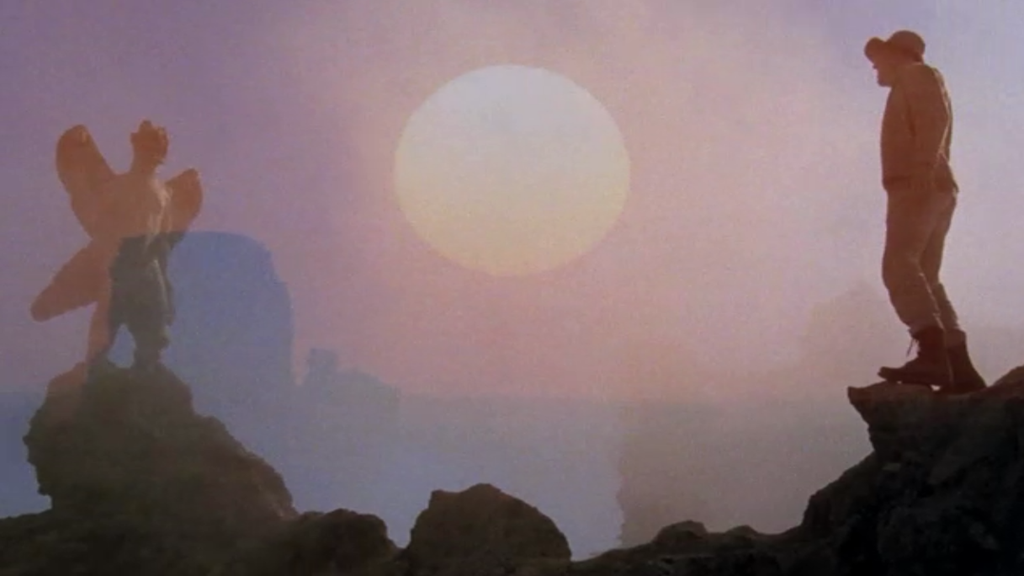
One of the final shots

Labels: ,

posted by AndyO @ 11:28 AM   0 comments

Sunday, September 26, 2010

Watching "Avatar: Special Edition" with James Cameron - Aug 24, 2010

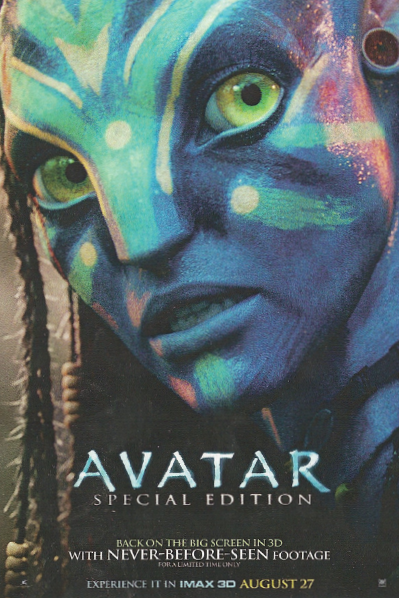
It's not every day James Cameron comes to Seattle. And it's rarer still when he comes to town to show a special edition of Avatar at the Boeing IMAX theater in Seattle Center. This was a charity event to benefit MUSE Elementary, founded by his wife Suzi Amis Cameron, and Learning and Brain Sciences at the University of Washington (I-LABS).
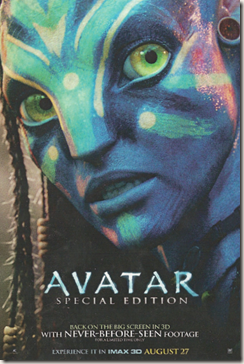
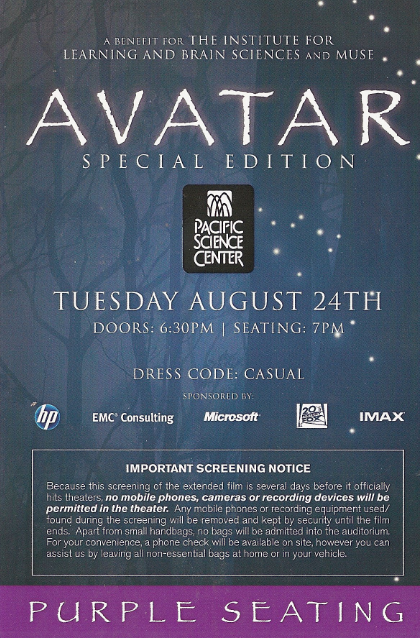
Avatar commemorative ticket: Front

Being that Avatar is my son's favorite movie, I took him along. He was  excited, but I don't think he really knew what he was in for.

Grand entrance

We were greeted at the entrance to the IMAX theater by kids wearing MUSE t-shirts. Once inside, we exchanged our tickets for our "commemorative" tickets. If you had a cell phone, you had to check it. They gave you a wrist band that indicated what seats you could sit in. Cameron and I got purple wrist bands.
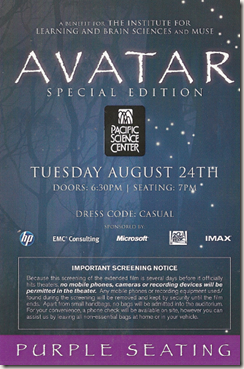
Avatar commemorative ticket: Back

We walked down the descending ramp that circles the IMAX theater, and, once there, mingled with the crowd. There were people dressed in tuxedos, business suits, t-shirts, and shorts. (Cameron and I went for the middle ground: khakis and nice shirts.) They had a delicious buffet line, which Cameron and I grazed (while he was too excited to eat, he was, however, interested in the "free soda").

Finding our seats and the arrival of Mr. Cameron

We finally lined up and went into the theater, where we sat for 30 or so minutes. Of course, Cameron was impatient -- wanting the film to start right away. He kept asking me the time, but I didn't have my cell phone with me. (I taught him how to "steal" time from people around you.) 

Near showtime (7:00 p.m.), I saw Suzi Amis-Cameron walk in and then noticed James Cameron standing there, too. Both of them were dressed up. Suzi started hugging a bunch of people in the audience.

After James Cameron was introduced, he talked about why they were releasing the Special Edition. He said that when they released the original version of Avatar, 20th-Century Fox was nervous about a 3D movie running over two hours. (Mr. Cameron said the studio executive said something like, "After two hours, people's heads might explode!"). Because of this, some scenes had to be cut. But now that the film had become the top grossing film of all time, the studio was much less nervous about releasing a "Director's Cut."

As far as my own opinion of "Director's Cuts," I've become more skeptical of them over time -- as they seem like another way for the studios to "double-dip." Today it seems like every third or fourth movie that releases includes a follow-up "Director's Cut" DVD -- or the even more tantalizing "Unrated" version. But sometimes, these versions of the films end up being superior to the original cuts -- Blade Runner and The Abyss, for example.

Watching Avatar with James Cameron 

The film started, and I sat back and watched the new version of Avatar, clocking in at 2 hours 50 minutes. Several times I looked back to see if Mr. Cameron was watching the film with us -- and, sure enough, there he was -- wearing his bug-eyed 3D glasses.

As the credits rolled and the audience applauded, I thought about how those extra nine minutes had added much more depth to the story, answered questions, and effectively gave more motivation to Jake Sully's character at the end of the film. While I didn't know I was missing these scenes before, which proves they weren't necessarily needed, they now seemed somehow… essential. (This once again reminds me of the saying, "Art is never finished; it's abandoned.)

So, if you're one of the few people who hasn't seen Avatar -- like the gentleman who was sitting next to me -- I highly recommend the Special Edition over the original version.

James Cameron's Q&A

After the film, James Cameron spent about 45 minutes answering questions from the audience. He started off by saying he hadn't seen the film in 7 months and how it was fun to see how the actors changed lines here and there for the better.

Here were some of the questions, along with my impressions:

James Cameron in person

In person, James Cameron is genuine and passionate. He's extremely articulate, but also has a soft-spoken quality. As is true with most people, he's a mass of contradictions: In his case, he seems like an engineer trapped in a filmmaker's body. (To get a sense of this, listen to this interview with Teri Gross of Fresh Air.)

But what I knew of James Cameron before I saw him in person was manufactured by the Hollywood buzz machine and the media. In his case, he's been portrayed as an egomaniacal director who puts his films before all else, rules his sets with an iron fist, and fights with his actors. He fed into this image with his "I'm 'King of the World!'" line after he won Best Director for Titanic.

But what I saw was a man who cares deeply about film and storytelling, about the world, and about people. Some might twist this into arrogance, but I think it's jealousy. The guy has the number 1 and 2 top-grossing films of all time; you don't get there without talent and perseverance -- and, in the case of Avatar, giving up four years of your life. There are also going to be times when you have to fight for what you want.

On the environmental theme

Cameron said that while Avatar has come to be known as an "environmental" film, he didn't set out to make one. In fact, the studio was nervous about this theme having a negative effect on the box office. Cameron said (and I'm paraphrasing), "I just wanted to make my movie about another planet with space ships, guns, and aliens."

Hardest scene to cut (asked by Bob Rivers, Seattle talk radio host)

Cameron said it was the scene where Jake finds the dying Tsu Tey, who asks Jake to kill him to complete the transfer of leadership of the Omaticaya clan to Jake. This sets up the motivation for when Jake's mind and spirit are transferred from his human body to his avatar body. (From a storytelling point of view, it's also the reason Dr. Grace Augustine is mortally wounded and they try to transfer her body. This shows the audience needed how dangerous this process is.)

Listen to Bob Rivers' own impressions of this event.

On the sequel

Cameron said they are indeed working on the sequel, which will take place in the jungle of Pandora and in the ocean. But don't expect this sequel for another four years (or more).

One thing that excites him about doing the next movie is that they don't need to re-invent the wheel, as they've invented the technology to make a film like Avatar. Now they can concentrate on other aspects of the film.

On the New Avatar Special Edition Boxed Set

Cameron said a new boxed set of Avatar is coming this year with even more footage (I think he said 40 extra minutes total). He said the boxed set is designed for people who want to immerse themselves fully in the world of Avatar and don't mind watching a 3-1/2 hour film and tons of extras (now I know why my Blu-ray copy of Avatar didn't have any extras on it).

He said that everything in the original script was shot.

Doing your part

A young girl in the audience asked what it felt like to have so much power to make changes in the world. Cameron turned the question around, challenging everyone in the audience to do their part to make the world better. For him, he said it might mean not making a film and getting more involved.

The freedom of digital filmmaking

One thing that I didn't realize until I heard Cameron's interview with Teri Gross was that the Avatar set was completely virtual. They captured the actors' performances digitally, which they could see on monitors. These images were crude versions of what would eventually end up in the film. This type of filmmaking made things easier for when they wanted to tweak the film later on. Typically, sets are torn down after a film is completed; but with Avatar, Cameron said if they wanted to change something, Sam Worthington (who played Jake) would just stop by when he was in town and reshoot a scene.

Digital vs. real

Someone in the audience asked about the divide between "digital" and "real."

Cameron joked, "It's all real."

The person went on to ask about how they blended real elements, like the water crashing on the shore in the last act of the film.

Cameron replied, "Oh, that was CG (computer graphics)," getting a laugh from the audience.

He did say that when he brought the idea of showing the ocean crashing against a shoreline, his digital effects team told him it was a near-impossible task to accomplish correctly. But they did.

On the Na'vi language

Someone asked how long it took for Cameron to "invent" the Na'vi language. Cameron said that the language was created by Dr. Paul Frommer in about six months.

He said the actor who had the most difficult role with the language was Zoe Saldana (Natyri), who had to speak English with a Na'vi accent. Cameron said they tried all kinds of accents before they found something that worked.

He also said that after Dr. Frommer saw the film, he wrote a memo to Cameron about how all the actors were speaking the Na'vi language incorrectly. Cameron joked that he somehow forgot to respond to that memo.

After the show

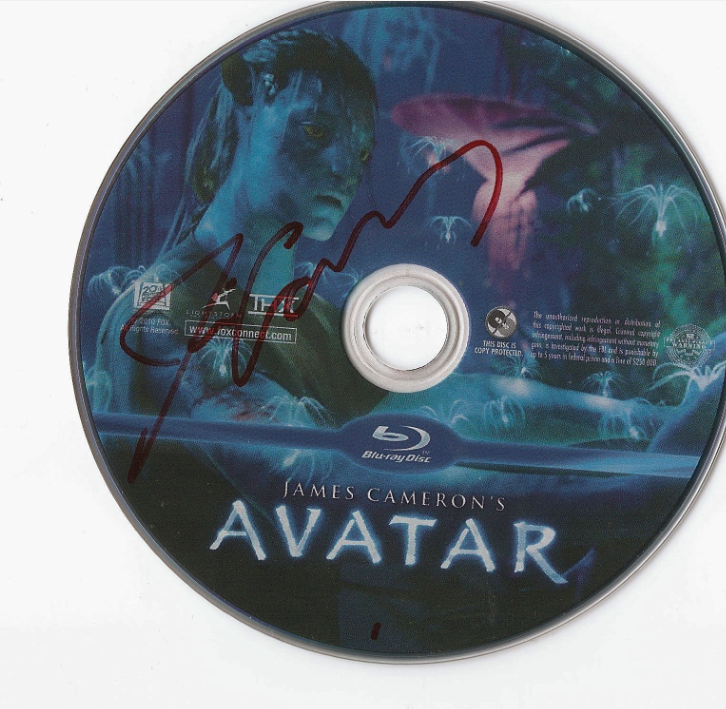
My son and I exited the theater and walked up to the main floor. A person from my work introduced me to Yuri Bartoli, one of the artists who worked on Avatar, who attended the screening. I was able to talk to Yuri for a while, which was interesting. While we were standing there, James Cameron and Suzi Amis-Cameron walked up the IMAX theater ramp. As he walked up, he posed for pictures and signed autographs. At this point, I pulled out the Avatar Blu-ray and red Sharpie that my son wanted Mr. Cameron to sign.

One of Mr. Cameron's assistants noticed me and that the autograph was for my son, so just as Mr. Cameron was heading for the door he said, "Jim, one more autograph over here!"

I handed the Blu-ray to Mr. Cameron and pointed to my son. "The autograph is for him."

At this point, I realized that James Cameron was pretty tall -- six-two or six-three. He walked over to Cameron and asked, "What's your name?"

"Cameron," my son said shyly.

"A-ha, it works as a first or last name!"
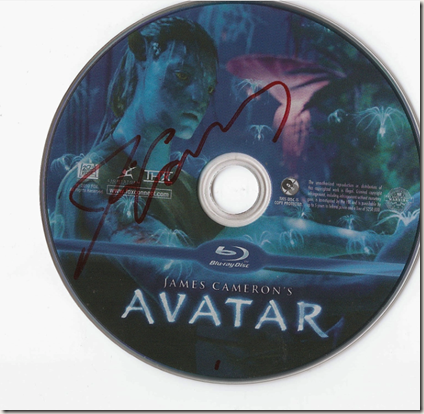
image

My son was also wearing a brace on his arm for a sprain, and Suzy asked him what he did to his arm.

"I fell off my bike," Cameron said, grinning.

Suzi then noticed my purple wrist band and asked, "Where did you get that?"

I told her it told us which seats we could sit in.

"I didn't get one," she said, in mock disappointment.

"You can have mine if you want," I said, but I realized she probably didn't want a band off my sweaty wrist.

I thanked Mr. Cameron for the autograph, and he and Suzi headed outside to a black SUV. I saw a few Seattle Police standing out there, too. After a minute or so, I saw camera flashes and noticed that James Cameron was outside taking pictures with fans, signing more autographs.

For some reason, I had this picture in my head of a man who was too busy for things like autographs, who would rush out the door surrounded by security people. But there he was, spending five or more minutes with that crowd.

Final thoughts

When I grew up, I always thought of my heroes as abstractions, demigods, people who existed in the ether of TV and movies. This was one of the reasons I wanted to take my son to this premier -- to show him that James Cameron is a real person, that he can actually stand in front of you and sign an autograph and talk to you.

There's a lot of power in creating a film like Avatar -- but I think there's even more power in realizing it takes real people like Mr. Cameron and the artist we met, Yuri Bartoli, to actually do the creating. And creating is hard work -- harder than what most people are capable of.

I hope meeting James Cameron breaks down that wall a little for my son,  that someday, if he works hard enough, he could work on a movie like Avatar, or whatever else he wants to do.

Links:

Video: James Cameron discusses why he's re-releasing Avatar

Blog: Avatar screenplay alterations and deletions

Labels: ,

posted by AndyO @ 3:53 PM   0 comments

Saturday, February 27, 2010

My list of best Washington State movie theaters

I recently updated my list of best movie theaters in Washington State. Let me know if you have any favorite theaters I should check out.

List of Best Theaters in Washington State

Labels: , , , ,

posted by AndyO @ 10:56 AM   0 comments

Wednesday, January 13, 2010

The highest-grossing movies (adjusted for inflation)

All this talk about Avatar racing toward Titanic's record as the highest-grossing movie of all time made me wonder: If these movies (and many others) were released the same year, which would really be the biggest money maker?

Well, the results are surprising. Thanks to Box Office Mojo, you can actually see how these movies stack up when you adjust them for inflation. For example, when I saw Star Wars back in 1977, the average price for a ticket was $2.23. Today, the average price is $7.35.

So, here's the list: (^ indicates multiple releases)

Rank Title (click to view) Adjusted Gross Unadjusted Gross Year^
1 Gone with the Wind $1,485,028,000 $198,676,459 1939^
2 Star Wars $1,309,179,000 $460,998,007 1977^
3 The Sound of Music $1,046,753,000 $158,671,368 1965
4 E.T.: The Extra-Terrestrial $1,042,629,400 $435,110,554 1982^
5 The Ten Commandments $962,850,000 $65,500,000 1956
6 Titanic $943,342,300 $600,788,188 1997
7 Jaws $941,379,300 $260,000,000 1975
8 Doctor Zhivago $912,395,600 $111,721,910 1965
9 The Exorcist $812,679,700 $232,671,011 1973^
10 Snow White and the Seven Dwarfs $801,150,000 $184,925,486 1937^
11 101 Dalmatians $734,391,800 $144,880,014 1961^
12 The Empire Strikes Back $721,627,700 $290,475,067 1980^
13 Ben-Hur $720,300,000 $74,000,000 1959
14 Return of the Jedi $691,336,700 $309,306,177 1983^
15 The Sting $655,200,000 $156,000,000 1973
16 Raiders of the Lost Ark $647,842,600 $242,374,454 1981^
17 Jurassic Park $633,612,900 $357,067,947 1993
18 The Graduate $628,949,700 $104,901,839 1967^
19 Star Wars: Episode I - The Phantom Menace $623,469,700 $431,088,301 1999
20 Fantasia $610,369,600 $76,408,097 1941^

So, as you can see, Avatar is nowhere to be found, but Titanic is.

The way this is calculated is through estimated number of tickets sold. For Star Wars, the number of estimated tickets is 178,119,600.

Here are the estimated tickets sold for Titanic and Avatar:

Rank Title (click to view) Studio Est. Tickets Unadjusted Gross Year^
6 Titanic Par. 128,345,900 $600,788,188 1997
52 Avatar Fox 60,917,000 $441,024,441 2009

It makes you realize that while Titanic did indeed sell a lot of tickets, Avatar is making most of its money from higher ticket prices -- both from inflation and the higher cost of the IMAX and 3-D format.

If Avatar were released the same year as Star Wars, it would only have grossed $135,844,900 instead of $441,024,441. (As of 1/13/09.)

Either way, James Cameron and George Lucas are both very wealthy. And they both make pretty good movies.

Labels: ,

posted by AndyO @ 8:12 PM   0 comments

Saturday, September 19, 2009

IMAX 3-D digital films: Upsell illusion

I just went to see Cloudy with a Chance of Meatballs with the kids today at the Regal Thornton Place theater in IMAX 3-D digital. The total cost for the matinee show (11:40 am) was $40.50! That's $15.50 for me (instead of the usual $8.50 matinee price) and $12.50 for each kid.

Stepping into the IMAX auditorium eased my buyer's remorse somewhat. The screen reaches from floor to ceiling and wall to wall -- not as big as the curved Boeing IMAX theater at Seattle Center, but certainly bigger than the average screen.

When the film started, the sound system thundered like a freight train, and the image quality was sharp and vibrant. But then I noticed something that I'd noticed in two other IMAX films, Up and Night at the Museum 2:

The image didn't fill the entire screen.

Much like watching a 16:9 widescreen movie on a TV, there were black "bars" across the bottom and the top of the screen:

image

So, how is this much different than a regular movie image? Why am I paying almost twice as much just because the screen is large?

After doing a little research, I found that a firestorm erupted in May 2009 by actor/comedian Aziz Ansari after he saw the new Star Trek movie on a screen that he didn't consider to be of proper IMAX size. (Turns out, most people think this is around 72 feet high.)

According to IMAX CEO Rich Gelfond in a Wired article, the screen size isn't the only thing that makes IMAX what it is:

IMAX means the most immersive film experience on the planet. 3-D is going to be more obvious to you in IMAX. And in 2-D, IMAX means a special sound system. It means special treatment of the film so that when Star Trek is shown in an IMAX theater, it goes through a digital process where we up-res the movie so there's more brightness and more contrast.

And with the screen part of it: In all of these multiplexes, IMAX is the biggest screen. But it's not only screen size. There's something called "perceived screen size," which involves the relationship of the viewer to the screen. If you're in the first row, that screen is going to look a hell of a lot bigger to you than if you're in the 30th row. We typically take out the first four rows of seats in a theater and move the screen forward so it's a lot farther forward in an IMAX theater. Also, the screen goes floor to ceiling, wall to wall. By bringing a floor-to-ceiling, wall-to-wall screen forward toward the audience, the viewer has the perception that the screen is larger than just the physical size.

I buy that there's a different process for converting a film for IMAX and that the sound system is better. But my beef is that the screen size is large but the movie isn't filling that screen. Well, then, I must be seeing a much better image resolution.

It turns out the image resolution might be only slightly better.

The IMAX digital film is created by using two Christie 2K resolution digital projectors. According to Wikipedia, "the two 2K images are projected over each other, producing an image that is potentially of a slightly higher resolution than common 2K digital cinema."

So, if the screen isn't larger, then you're not really getting much value for your expensive ticket -- just an image that is potentially of a slightly higher resolution. But I thought the reason for paying for an IMAX version of the film is so you can have the most immersive, amazing experience in a movie theater. Turns out it's not much different than going to the non-IMAX or 2D version of the film -- at least in some theaters.

Then what's going on here? Like many things in life, it's about money.

Let's take a look at The Dark Knight. $55 million of the $1 billion the film earned worldwide (18%) was from IMAX theaters. Without those "premium" tickets, the film takes in less money, the studio execs get smaller bonuses, the theater chains can't add more IMAX theaters, etc.

But the real crime with the smaller IMAX screens or the reduced projection size on a large screen is that the average moviegoer isn't even aware (at least consciously). They're paying extra for the IMAX brand -- and not really getting their money's worth.

So, as I see it IMAX has three problems (and to their credit, they're looking into fixing the branding problem now):

  1. Not all IMAX screens are equal in size.
  2. Not all IMAX screens are equal in resolution (digital vs. 70mm).
  3. The projection image size of the IMAX film doesn't always take up the entire screen size -- which brings us back to #1.

If you want to know which IMAX screens are the smaller size, here's a handy map:


View IMAX or LIEMAX? in a larger map

If you're interested in reading some other articles about this issue, see the following:

Roger Ebert's Q&A on IMAX (published before Aziz Ansari's blog)

LFexaminer: Is IMAX the next "New Coke"?

LFexaminer: Links to IMAX controversy articles

Variety: IMAX responds to screen size critics

Labels: , , ,

posted by AndyO @ 11:41 PM   1 comments

Wednesday, April 02, 2008

The Digital Movie Download War

Blu-ray DiscNow that Blu-ray has won the battle for high-definition discs, we can all go out and buy Blu-ray players and feel content with our purchases, right? That's what Sony would like you to believe. There are two problems with this:

  • Blu-ray players are too expensive (most over $300)
  • Many current Blu-ray players don't support Profile 2.0, so they're already obsolete (If you don't believe me, see this CNET post.)

There's also a secondary point about high-definition content. Most people don't care about it right now. 

Because I don't think Blu-ray will offer enough of an incentive to drop the good old DVD player, my prediction is that digital movie downloads will become the format of choice. I know, you might be thinking that a lot of people still want to drive down to BestBuy on Tuesday to pick up the latest DVD release and hold the shiny disc in their hands. But then I would remind you that people said the same thing about music CDs.

I've started to try out different digital movie download and streaming services. While I don't think all of them offer the average consumer the ideal experience, I think you're going to see huge advances in the next year that will make it easier.

Here are the services I've researched (or tried out myself):

Microsoft and the Xbox 360

When HD-DVD lost the HD battle, it was a direct blow to Microsoft. The company's technology was embedded in HD-DVD technology. However, Microsoft is also one of the first companies to start renting HD digital movies over its Xbox 360 system.

The good: I own an Xbox 360, and renting movies using the Xbox Marketplace is a breeze. You add "Microsoft Points" to your account and go buy or rent whatever you want. Once you rent an HD movie, you can start watching it in 10-15 minutes. The great thing about the Xbox system is you can go play a game while you wait. 

The bad: So far, the movie selection isn't as deep as I'd like to see. Plus, searching for a movie isn't as easy as it is using a computer. Xbox 360 Elite Pro bundle starts at around $500, so it's not cheap at this point. Once you start the movie, you have 24 hours to watch it--which can be too short. But this is standard with most digital downloads.

Digital Cable and DirectTV (satellite)

Cable has come a long way in the past 10 years. Not only can you watch HD content on your new LCD or Plasma TV, but you can watch it when you want. If any group is poised to take advantage of a new digital rental model, cable and satellite companies are probably in the best position.

The good: Familiar set-top box model. No computer needed. Additional services, including Internet, available as a bundle.

The bad: High cost per month. Limited selection of movies per month, depending on what the cable or satellite company makes available.

Netflix

The Netflix Watch Now feature, which allows you to stream movies over your computer, is top-notch. They've continued adding titles, including entire seasons of hit shows. I watched the first season of Heroes using this technology.

The good: Unlimited viewing of 7000 titles. Movies start in about 30 seconds. DVD-quality is acceptable on an HD TV.

The bad: No HD Watch Now feature yet. Computer required.

Rumors: Being able to watch movies through Netflix on your Xbox 360.

Apple TV 2.0

I don't know much about this offering, having never used it myself -- but after reading this detailed review complete with side-by-side image comparisons, it seems like it's pretty good. CNET also liked it.

The good: Movies from every major Hollywood studio. HD available for most new titles. Integrated Podcasts and YouTube.

The bad: $229 for a stand-alone device (too much for some people). Doesn't work with older TVs that aren't widescreen.

CinemaNow

I've watched one CinemaNow movie through my Xbox 360. The way this works is you download the movie to your PC, and then you can stream it over the Xbox.

The good: Large movie selection.

The bad: No HD options, except for a few titles that you can buy. The movie that I downloaded and watched through my Xbox 360 didn't look good enough on my HD TV.

Labels: ,

posted by AndyO @ 6:19 PM   0 comments

Wednesday, March 12, 2008

Indiana Jones IV trailer

I saw this once in the theater, but now it's online. Can't wait to see this one!

Indiana Jones and the Kingdom of the Crystal Skull - Trailer

Labels:

posted by AndyO @ 12:43 PM   0 comments

Saturday, March 01, 2008

Thoughts on the 80th Academy Awards

80th Annual Academy Awards Anniversary 2008This year, I told my wife that I wasn't going to watch the Academy Awards. I said that I didn't have time, that I didn't really care who won, etc.

Around 7:00 p.m., Brenda turned on the show. I was working on the computer in the same room, and after a while I left the computer and sat down on the couch to watch. And then I pretty much watched the rest of the show.

Watching the show in high-definition for the first time, I found myself studying the audience and picking out, say, Harrison Ford or Jack Nicholson. It was almost as if I was standing there onstage with Jon Stewart. I was hypnotized.

Many people say that this was a banner year for movies. Some say that we haven't seen this level of creativity and quality since the 1970s. While I haven't seen all the films that topped the critics' list, I did see Juno and There Will Be Blood, and liked them both. I guess it tells you something that Hollywood outsiders, the Coen Brothers, won multiple Oscars this year for their movie No Country for Old Men.  

The morning after the Oscars, I read an e-mail story that my dad sent me about how many of the movies that have withstood the test of time didn't get the Oscar in their day. For example, Citizen Kane, recognized by most to be the best film ever made, only got one Oscar (for screenwriting). I wrote back:

Yes, I've heard that many of the greatest films were snubbed. I remember the first time I was aware of this was when Star Wars lost to Annie Hall for Best Picture. I think Annie Hall is a brilliant film (now, anyway), but Star Wars has had a much greater impact on film -- and is considered one of the greatest films now (like Citizen Kane).

So, it goes to show you that the Academy's taste doesn't always stand the test of time -- that the awards don't really matter as far as art is concerned. But for those of us who love movies -- the Academy Awards are a yearly party that we can attend to honor the craft of filmmaking (at least virtually). Which is why even when I say I'm not going to attend that party anymore, I somehow always find myself sitting in front of the TV.  

Labels:

posted by AndyO @ 6:50 PM   0 comments

Monday, December 17, 2007

The AndyO Sweeney Todd trailer

On the website for Sweeney Todd, you can cut your own trailer. Here's the one I cut

Labels:

posted by AndyO @ 12:22 PM   0 comments